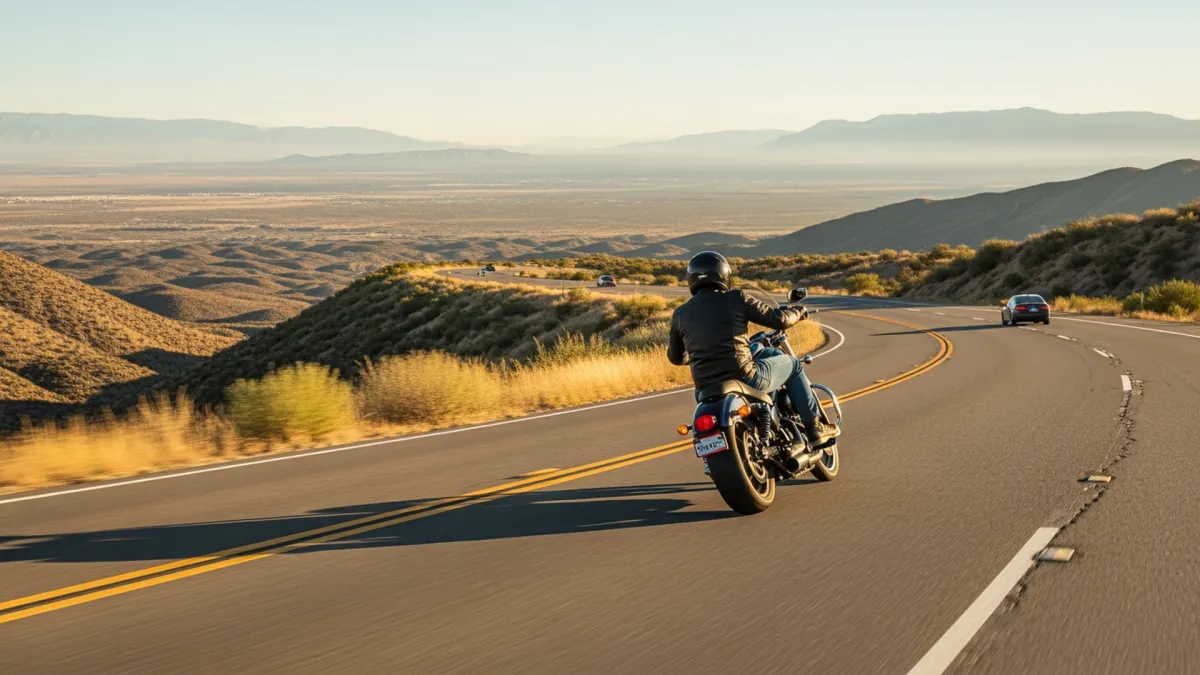
Pure Comparative Negligence in California: Why a San Diego Rider Always Recovers Something
A car drifts into your lane on I-15 north of Miramar, you lay the bike down to avoid it, and before the pavement has cooled the other driver's insurer is already building a story where the whole thing is somehow your fault. If you were in one of the 51 percent-bar states, that story could end your claim outright. In California, it cannot. The way our state splits fault is one of the most rider-friendly rules in the country, and understanding it changes how you deal with the insurance company from day one.
What Pure Comparative Negligence Actually Means
California assigns a percentage of fault to everyone involved in a crash, then reduces each person's recovery by their own share. That is the whole rule. What makes it pure is that there is no cutoff. In many states, if you are found 51 percent or more at fault you recover nothing, so the insurer only has to push your share of blame past the halfway mark to erase your claim. California removed that cliff back in 1975 in Li v. Yellow Cab Co. Here, fault only ever shrinks your recovery. It never eliminates it.
Say a jury values your damages at $200,000. If you are found 20 percent at fault, you recover $160,000. If you are found 60 percent at fault, you still recover $80,000. In a bar state, that same 60 percent finding would leave you with nothing. That is the difference, and for a rider it can be the difference between covering your surgery and eating the cost yourself.
Why Insurers Still Fight to Shift Blame
If a rider always recovers something, why do adjusters work so hard to pin fault on you? Because every percentage point they move onto you is a percentage point off the check. Under the pure rule they may not be able to zero out your claim, but shifting you from 10 percent to 40 percent fault on a $200,000 case quietly takes $60,000 off the table. That is real money, and against motorcyclists they reach for the same tired assumptions to get it.
- ✓ The speed accusation. They will take a vague witness line or the reputation of your bike and try to turn it into a number, often with no real evidence behind it.
- ✓ The lane-position argument. They will claim you were too far left, too far right, or filtering when you should not have been, even though lane splitting is legal in California when done at a reasonable speed.
- ✓ The rider-bias play. They lean on a juror's gut feeling that anyone on two wheels was doing something reckless. That is a bias, not a fact, and it does not belong in your fault percentage.
- ✓ The gear angle. They will probe whether your helmet was DOT compliant or whether your gear was adequate, looking for any hook to move blame your way.
Why Documentation Decides the Percentage
In a California motorcycle case, the fight over your fault percentage is the fight over your money. You do not win it by hoping the adjuster plays fair. You win it with evidence that fixes the real numbers in place before the insurer can rewrite them. Skid marks, vehicle damage, and final resting positions reconstruct who actually did what. Signal timing and sightlines on the real road, whether that is CA-163 through Balboa Park or the merge onto I-8 at Mission Valley, show what each driver could see. Independent witnesses, nearby business cameras, and your own helmet or bike cam carry weight that no adjuster's guess can match.
The riders who keep their fault share low are almost always the ones who preserved that evidence early, or had someone doing it for them while they were still in a hospital bed. The insurer starts building its version of the crash within days. Your version needs to be built too.

Have questions after a wreck? Maxwell Agha and the motorcycle accident lawyers in San Diego at Banker's Hill Law Firm (bhlflaw.com) review rider claims and explain your options.